

 Favorite (4)
As high-tech systems become increasingly sophisticated, engineers face growing pressure to combine advanced functionality with reliable and cost-efficient manufacturing. In industries such as semiconductors, medical technology, and analytical instrumentation, product reliability is critical. At the same time, tolerances have tightened to the micrometer range, product designs have become more complex, and production volumes are often smaller than in traditional manufacturing. Many of these products are also used in cleanroom environments, where even the smallest contamination can affect process stability.
In these demanding applications, uptime is essential. Unplanned downtime can disrupt critical manufacturing processes and lead to significant costs. Engineers at OEMs and their suppliers therefore face the challenge of balancing functionality, manufacturability, quality, and cost throughout the entire product development process.
Every product passes through a complete lifecycle - from concept development and prototyping to series production and, eventually, end-of-life. The earlier manufacturing expertise becomes part of this process, the greater the opportunity to optimize both the product and the production method. Rather than adapting a finished design to existing manufacturing capabilities, close collaboration between development teams and manufacturing specialists creates opportunities to improve functionality, simplify production, and achieve a more efficient and reliable end product.
This collaborative approach becomes even more valuable when metal components are replaced by high-performance engineering plastics. Materials such as PEEK, POM, PEI, PI, and PTFE offer significant advantages, including corrosion resistance, electrical insulation, low weight, and non-magnetic properties. However, simply replacing metal with plastic rarely delivers the desired outcome. Plastics respond differently to temperature, humidity, mechanical loads, and machining processes, requiring a different engineering approach. By combining application expertise with manufacturing knowledge from the earliest stages of development, engineers can fully leverage the potential of these materials while meeting demanding functional and production requirements.
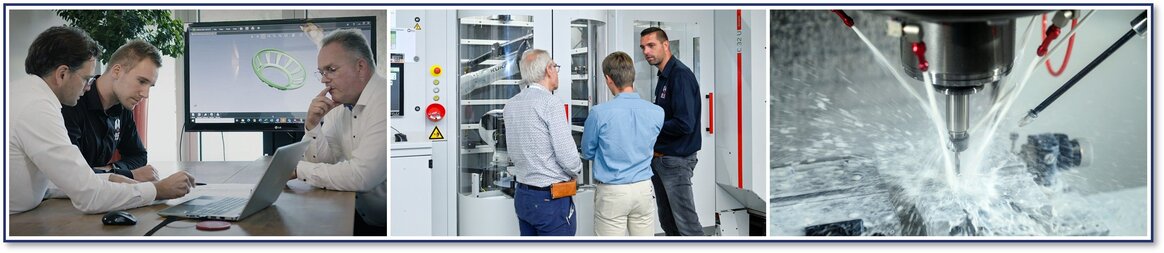
OEMs and their suppliers face increasing pressure to bring innovative products to market faster while meeting stringent technical, regulatory, and economic requirements. Based on our experience working with engineering teams, several challenges arise repeatedly throughout the product development process.
Accelerating time-to-market is a constant priority, yet products used in semiconductor, medical, and analytical applications must also comply with demanding quality standards and industry regulations. At the same time, manufacturers must optimize the Total Cost of Ownership (TCO) across the entire product lifecycle - not just minimize the cost of the first production batch. Limited engineering resources and specialized manufacturing expertise can further complicate these challenges.
This is where early collaboration makes a measurable difference. With more than 40 years of experience in precision plastic machining, BKB Precision supports OEMs by integrating manufacturing expertise into the development process from the outset. Design modifications are typically straightforward during the concept and prototype phases but become significantly more complex and expensive once a design has been finalized. By considering manufacturability early, engineering teams can reduce development risks, improve production efficiency, and maintain compliance with technical and regulatory requirements.
We call this collaborative approach the Product Efficiency Partnership (PEP). It begins with the initial product concept, where functional requirements, material selection, and manufacturability are evaluated together. Prototypes and proof-of-concept testing provide valuable insights that allow designs to be refined before production processes are established.
As development progresses, manufacturing concepts are optimized alongside the product design. Pilot production validates both the manufacturing process and product performance under realistic conditions, ensuring a smooth transition to reliable series production. This structured approach helps OEMs accelerate development while improving quality, manufacturability, and long-term cost efficiency.
Efficient manufacturing starts with selecting the right production strategy. While many components require customized solutions, the goal is always to maximize the use of proven standard manufacturing processes wherever possible. This approach improves process stability, reduces complexity, and helps optimize the Total Cost of Ownership (TCO) over the product's lifecycle.
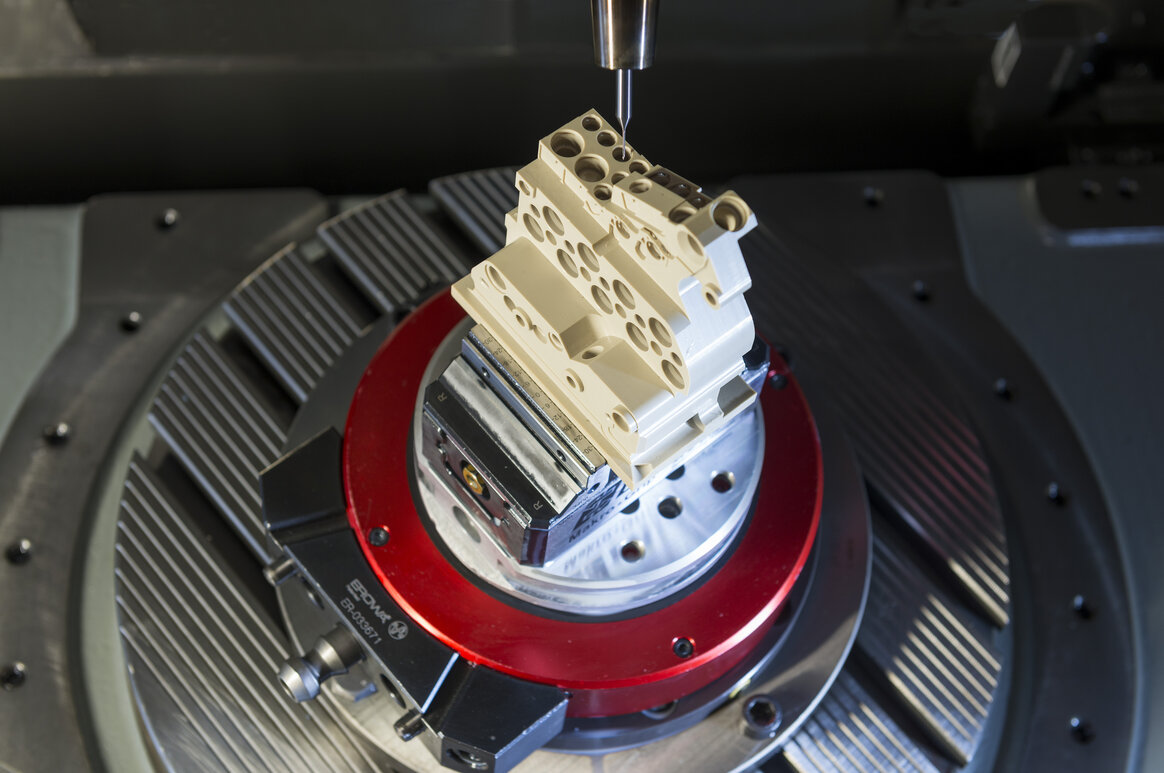
The manufacturing process typically begins with precision machining on advanced 3-axis or 5-axis CNC milling machines or turn-mill centers. Depending on the component geometry and tolerance requirements, additional machining operations are performed to achieve the final dimensions. When standard workholding solutions are insufficient, custom fixtures and tooling are designed to ensure repeatable, high-precision production.
Producing complex plastic components with tolerances of just a few micrometers requires state-of-the-art equipment. BKB Precision operates ultra-precision machining centers from Hermle, Mazak, and Okuma in climate-controlled production environments, where stable temperature and humidity help maintain dimensional accuracy of up to ±3 µm.
After machining, every component undergoes careful finishing. Cold jet deburring efficiently removes burrs without mechanical contact, minimizing the risk of damaging delicate features or precision surfaces. Depending on the application, components are subsequently cleaned in a multi-stage ultrasonic cleaning system to remove particles and residues before further processing.
For complete assemblies, bonding and assembly operations can be performed both inside and outside cleanroom environments. Plastic components are integrated with purchased parts to deliver ready-to-install assemblies that meet the cleanliness and performance requirements of demanding semiconductor, medical, and analytical applications.
High-performance engineering plastics, including PEEK, POM, PEI, PI, and PTFE, form the foundation of this manufacturing process. These materials are sourced exclusively from qualified European suppliers to ensure consistent quality and material traceability. Achieving reliable machining results also depends on high-quality cutting tools and application-specific tooling. Although these investments may increase initial production costs, they significantly improve process stability, dimensional repeatability, product quality, and ultimately the Total Cost of Ownership.
As high-tech products become more complex, the demands on OEMs and their supply chains continue to grow. Shorter development cycles, increasingly stringent quality requirements, and the use of advanced materials make early manufacturing expertise more valuable than ever.
By involving manufacturing expertise from the earliest stages of product development, engineering teams can identify opportunities for optimization before designs are finalized. This collaborative approach helps improve functionality, streamline production, and reduce development risks.
The Product Efficiency Partnership (PEP) brings together complementary expertise: OEMs contribute in-depth application and functional knowledge, while BKB Precision provides decades of experience in precision plastic machining and manufacturing optimization. This collaborative approach supports faster development, smoother production ramp-up, improved product quality, and a lower Total Cost of Ownership (TCO) throughout the product lifecycle.
Successful products are rarely the result of design alone. They are created when engineering, materials expertise, and manufacturing knowledge come together from the very beginning.
If you are developing a new product, optimizing an existing design, or evaluating the use of high-performance engineering plastics, involving manufacturing expertise early can reduce risk, improve production efficiency, and accelerate time-to-market. BKB Precision works alongside OEM development teams to transform innovative concepts into reliable, manufacturable products.
Your key partner for high performance plastics