

 Favorite (4)
Precise multi‑wavelength laser sources have become a driving force behind innovation in life science and industrial imaging. Yet as systems demand more colors, higher stability and faster modulation, the complexity grows: perfectly aligned beams, reproducible power levels, synchronized excitation and tight thermal control are essential for reliable results. Applications such as fluorescence microscopy, flow cytometry or optical inspection increasingly depend on light that behaves predictably at every moment. Integrated multi‑wavelength modules demonstrate how these challenges can be mastered — enabling stable, high‑resolution and efficient optical analysis across disciplines.
Optical systems in research and industry must provide multiple precisely defined laser wavelengths that are stable, coaxial, and well‑controlled. Applications such as fluorescence microscopy, confocal imaging, light‑sheet microscopy, flow cytometry, or high‑throughput screening require different excitation wavelengths, often in rapid succession or simultaneously. Industrial processes such as projection, display technology, or optical inspection increasingly rely on multi‑color laser sources to evaluate material properties or color information with high precision.
One of the central challenges is the precise superposition of multiple laser sources. Each diode has its own beam parameters, divergence, and polarization axes. Even small mechanical tolerances can lead to drift or misalignment. This becomes particularly critical in systems where all wavelengths must pass through the same aperture, such as in confocal microscopy.
For quantitative imaging and fast screening workflows, laser lines must be reproducible, stable, and precisely controllable in time. Power fluctuations, nonlinear modulation, or differing rise times complicate the simultaneous use of multiple wavelengths and can degrade image quality. A precise synchronization of all sources is therefore essential to reliably excite fluorophores.
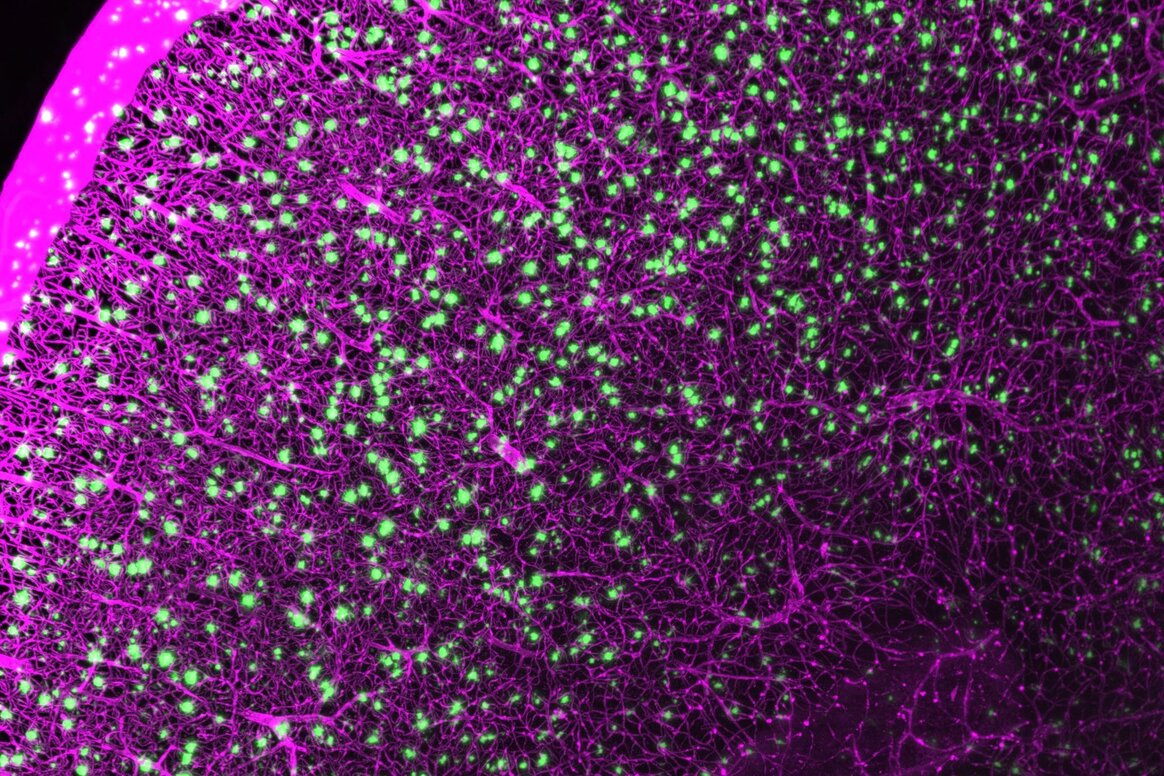
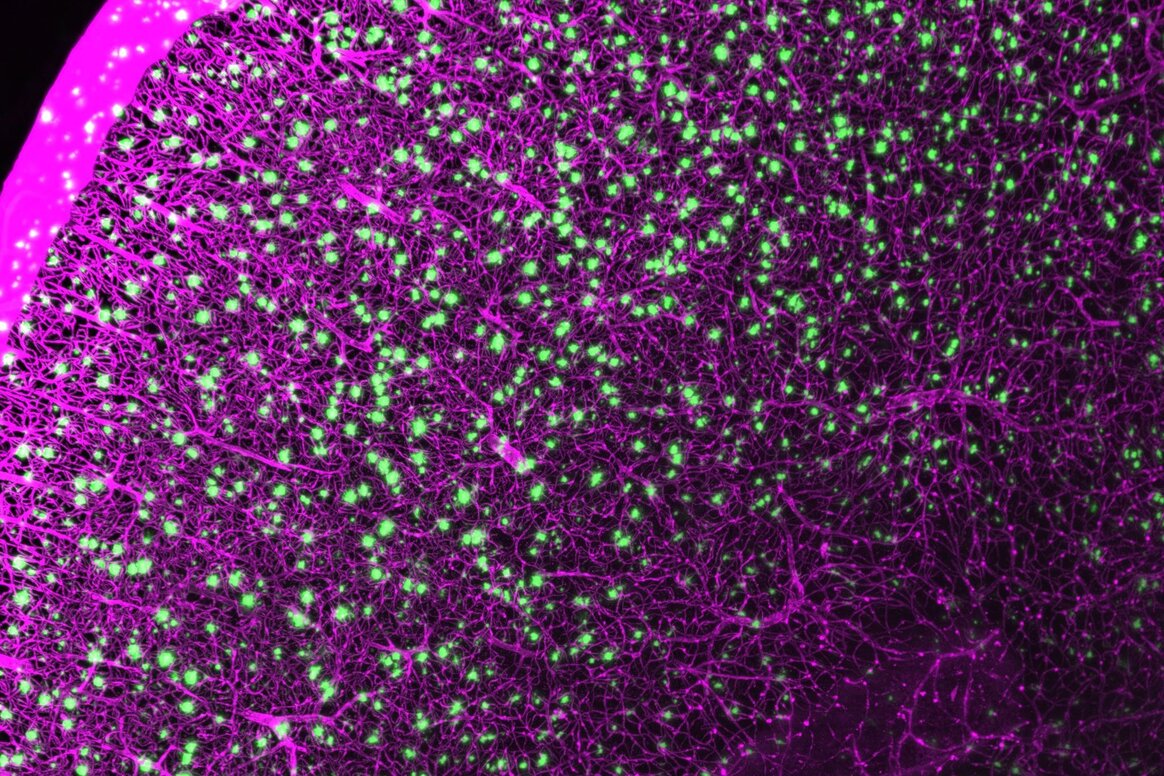
In confocal fluorescence microscopy, both excitation light and emitted fluorescence pass through optically conjugate pinholes, enabling the imaging of a single point within the specimen. By scanning across different positions, a two‑ or three‑dimensional model of fluorophore distribution is generated. When multiple fluorophores are detected, the corresponding excitation sources must pass through the same pinhole. To achieve high‑quality images, the output power of each wavelength must remain stable throughout the entire scanning process.
Flow cytometry is a method for rapidly classifying cells and other microscopic particles. The cells of interest are guided through a narrow microfluidic channel. Laser beams illuminate the channel, and both scattered and fluorescent light are collected. With multiple light sources, the ratio of intensities emitted at different wavelengths can be used to measure several parameters simultaneously, enabling fast classification of large cell populations.
Laser diodes are highly sensitive to temperature changes. Even small fluctuations affect wavelength, output power, and polarization stability. In addition, diode lifetime decreases under thermal stress. Precise temperature control is therefore essential to achieve reproducible results.
Multi‑wavelength light sources must be integrated into existing instruments. Space constraints, external drivers, separate cooling systems, and varying electrical interfaces increase system complexity. Mechanical stability is crucial to prevent drift and reduce the need for realignment.
From a scientific perspective, these challenges can be addressed through the following principles:
These principles form the foundation of modern multi‑wavelength light sources.
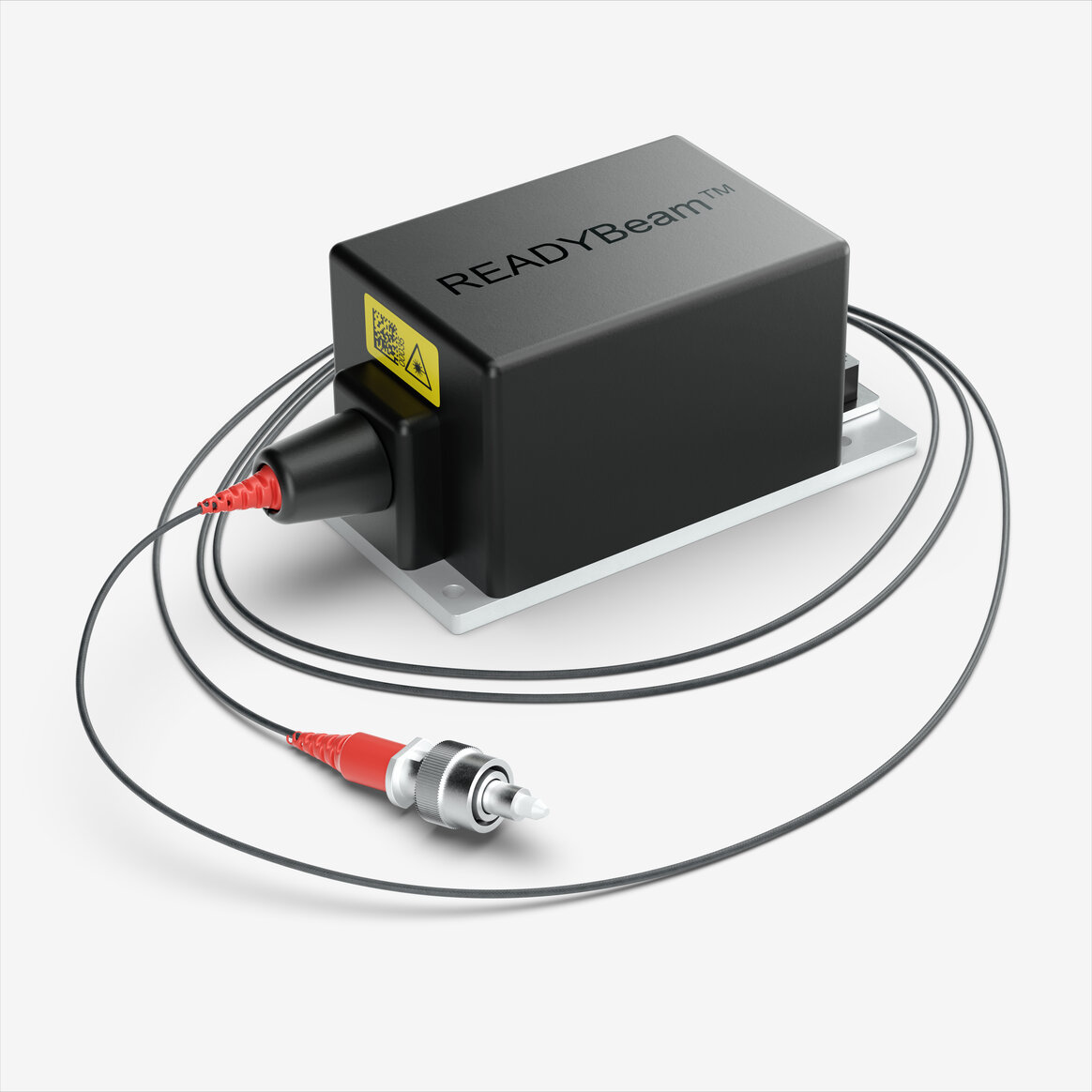
An example of implementing these principles is the READYBeam, which addresses the described challenges by combining three laser lines into a single‑mode, polarization‑maintaining fiber and integrating optical, electronic, and thermal functions into a compact module. Closed‑loop power control, thermoelectric stabilization, and digital modulation up to 1 MHz enable stable and reproducible multi‑wavelength excitation in scientific and industrial applications.