Links
Member profile



Fraunhofer IZM and quantum tech company Nomad Atomics are teaming up on QuoGkA, a research project developing a compact atom gravimeter that will, in the future, measure gravitational fields from the air. The goal is to shrink measurement systems that have always been confined to the lab down to a size that fits comfortably on a drone. The breakthrough making this possible is a highly integrated glass bench developed at Fraunhofer IZM, which combines key optical components and a rubidium gas cell into a single unit. The result is precision gravity measurement that can finally leave the lab, opening up new possibilities in mining, environmental monitoring, and research.
Atom gravimeters measure gravitational fields with extreme precision using a technique called atom interferometry, where ultra-cold rubidium atoms act as quantum sensors. The alkali metal is particularly well suited to this method because it has an easily controllable laser transition and can be cooled relatively easily. The atoms are chilled to the point where they start behaving like waves. Short laser pulses then split these "atom waves", send them off in different directions, and bring them back together. The measured difference reveals the strength of gravity. This makes it possible to detect even the smallest changes in the gravitational field and draw conclusions about underground structures – for applications such as raw material exploration, water management, and geophysical research.
Until now, such systems have been large, heavy, and largely confined to laboratories. Commercial atom gravimeters can weigh well over 100 kilograms, making them unsuitable for mobile applications. With QuoGkA (»quantum sensing through optical integration for gravimetry with cold atoms«), researchers at the Fraunhofer Institute for Reliability and Microintegration IZM and project partner Nomad Atomics aim to drastically reduce the logistical effort involved, to the point where these systems could even be deployed on drones in the future. This requires miniaturizing the optical systems and integrating them onto a shared platform – the central contribution made by Fraunhofer IZM.
At the heart of the work is an electro-optical circuit board that combines optical and electrical functions on a shared glass platform. The components, previously built separately, are thus integrated on an area of around 50 cm².
At its core are optical waveguides integrated into the glass, which guide the laser light precisely through the system. Fraunhofer IZM uses a special ion-exchange process for this purpose – a technology mastered by only a few research institutes and companies worldwide. While such waveguides have so far primarily been used at a wavelength of 1,550 nanometers for telecommunications applications, Fraunhofer IZM researchers are now realizing, for the first time, single-mode waveguides with a target wavelength of 780 nanometers in an industrial process using commercial thin glass. This wavelength is needed to cool the rubidium atoms to temperatures close to absolute zero for atom interferometry.
Key components include a multimode interference coupler, an evanescent coupler for splitting the laser signals, and a 1-to-n switch based on an electro-optical polymer developed by the startup Hyphox. The switch electrically distributes the laser signal to one of four channels. In addition, project lead Jackson Kocis and his team are developing a rubidium gas cell made of glass, manufactured using a laser welding process and integrating optical components for beam shaping.
By combining these technologies, a highly integrated platform for quantum sensing is being created that can be manufactured industrially and deployed in mobile applications in the future. This will make high-precision gravity measurements possible even in regions that have so far been difficult to access.
The QuoGkA project runs from 01.08.2024 to 31.07.2027 and is being carried out as part of the ProFIT (IBB) funding program under funding reference 10206866. In addition to Fraunhofer IZM, Nomad Atomics is involved.
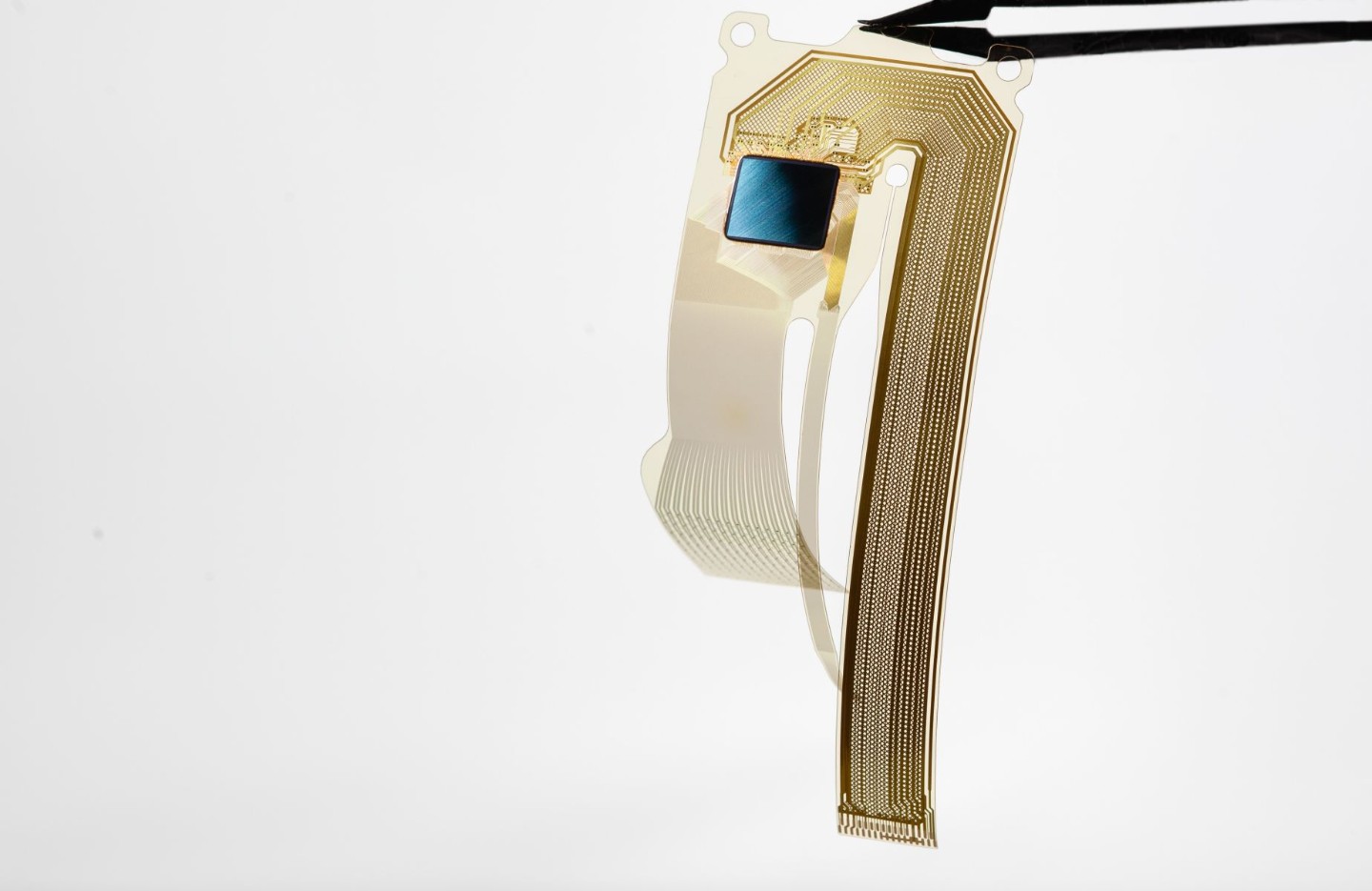
Working with partners from across Europe, Fraunhofer IZM has helped create highly integrated and flexible brain implants as a new, …
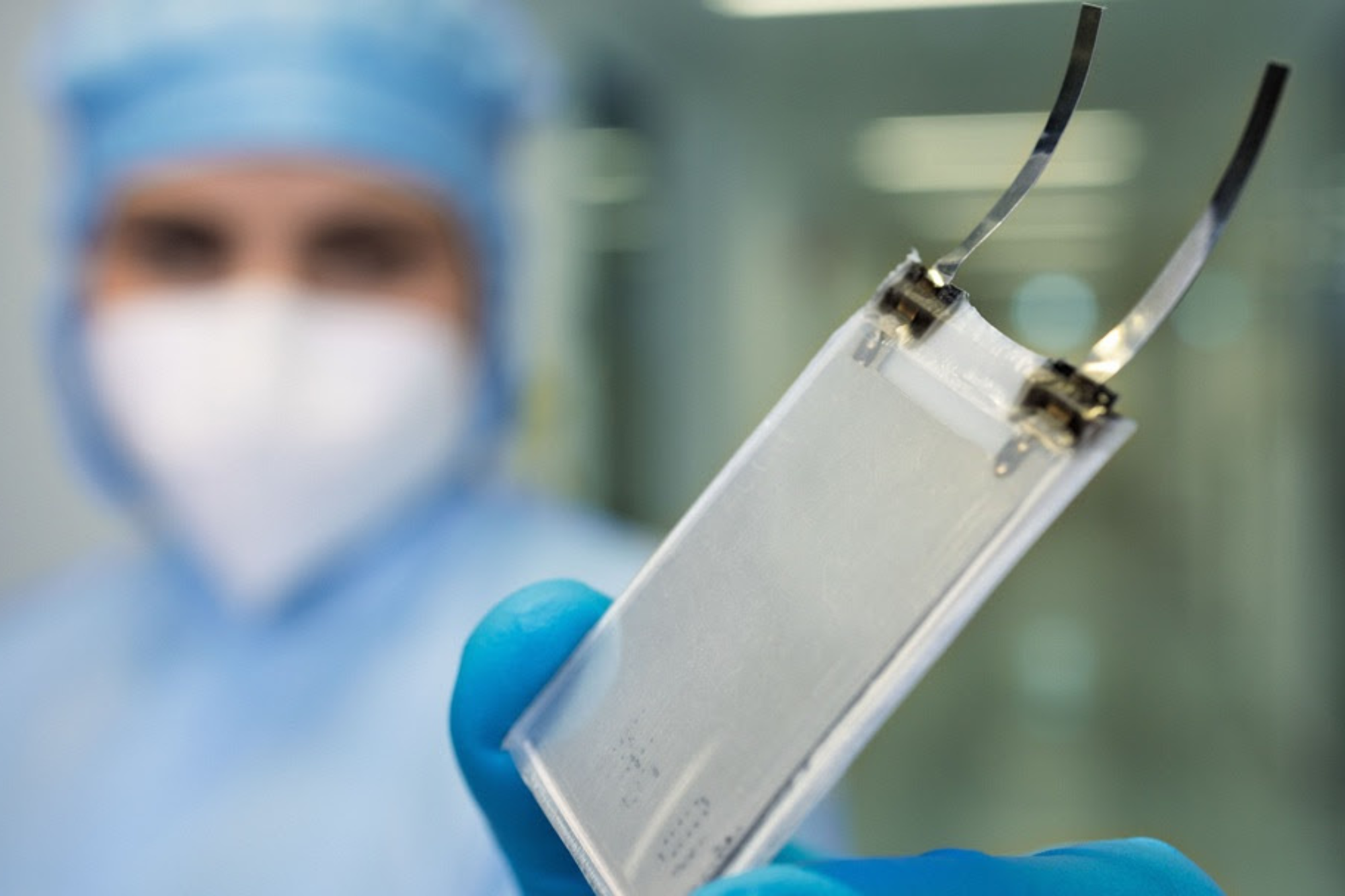
With support from the Fraunhofer Institute for Reliability and Microintegration IZM, the start-up Zn2H2 is developing a new generation of …
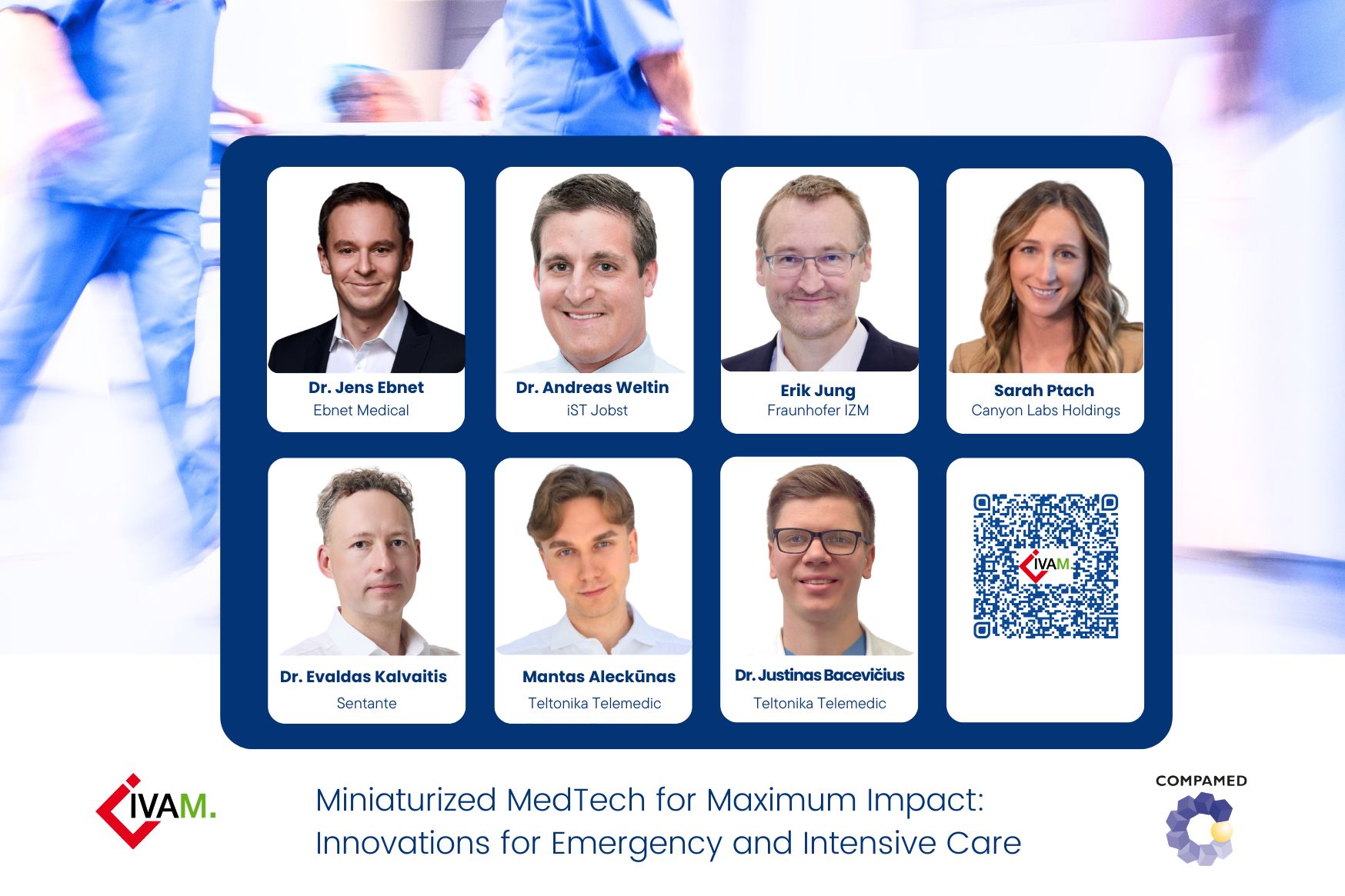
The healthcare systems worldwide are undergoing a profound transformation – particularly in emergency and intensive care, where every second counts. …

.jpg)