Links
Member profile


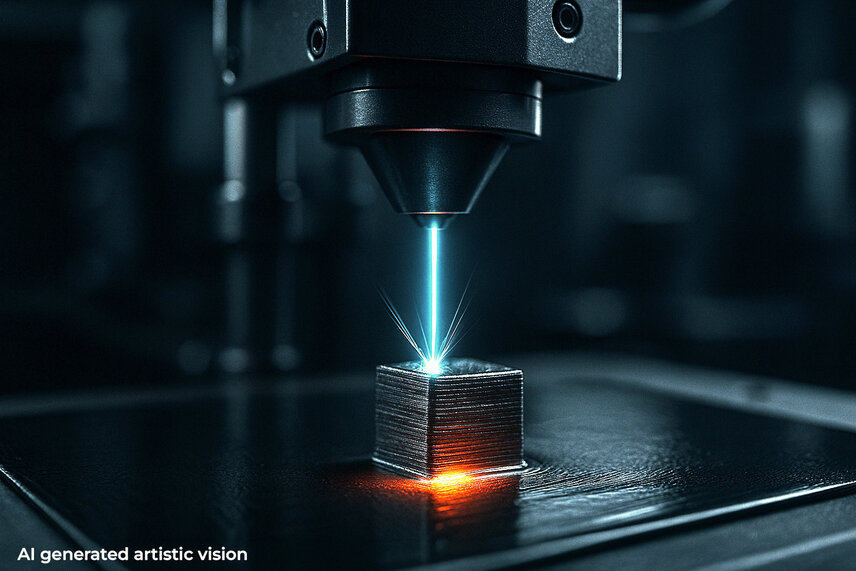
Sponge-like structures in nature combine low weight with high stability and excellent damping properties. This principle is at the core of the EU-funded Bio.3DGREEN project. Coordinated by the Laser Zentrum Hannover e.V., 14 partners from nine countries are working on bio-based graphene foams that could become a sustainable alternative to conventional damping and lightweight materials.
At the heart of the project is a laser-based additive manufacturing process. The starting material is a paste made from plant oil and nickel-coated metal powder. During the layer-by-layer process, the metal is selectively removed, resulting in a porous graphene foam structure. The extracted metal powder can be reused, improving overall resource efficiency.
As this material is being used in additive manufacturing for the first time, the Laser Zentrum Hannover e.V. is developing a dedicated 3D printing test bench and a tailored material feeding system. In addition, suitable laser parameters are being defined to ensure precise processing.
Alongside the technological work, the partners assess environmental and economic impacts. Life cycle assessments (LCA) and life cycle costing (LCC) analyses evaluate CO₂ emissions, energy consumption, and recycling potential, with the aim of integrating the technology into a European circular economy.
The developed graphene foams offer strong potential for applications in automotive, aerospace, and maritime industries, where lightweight, stable, and damping materials are in high demand.
The project is funded by the European Union under the Horizon Europe programme.
.png)
The new EU Packaging and Packaging Waste Regulation raises many practical questions for companies: Which requirements apply to their packaging? …

Four finalists, two new IVAM members and outstanding technologies: the Medical Manufacturing Asia Marketing Excellence Award highlighted innovative companies while …

Following the successful premiere in 2026, IVAM is organizing another joint booth at NANO KOREA. Support for selected services creates …

 (1).1.png)